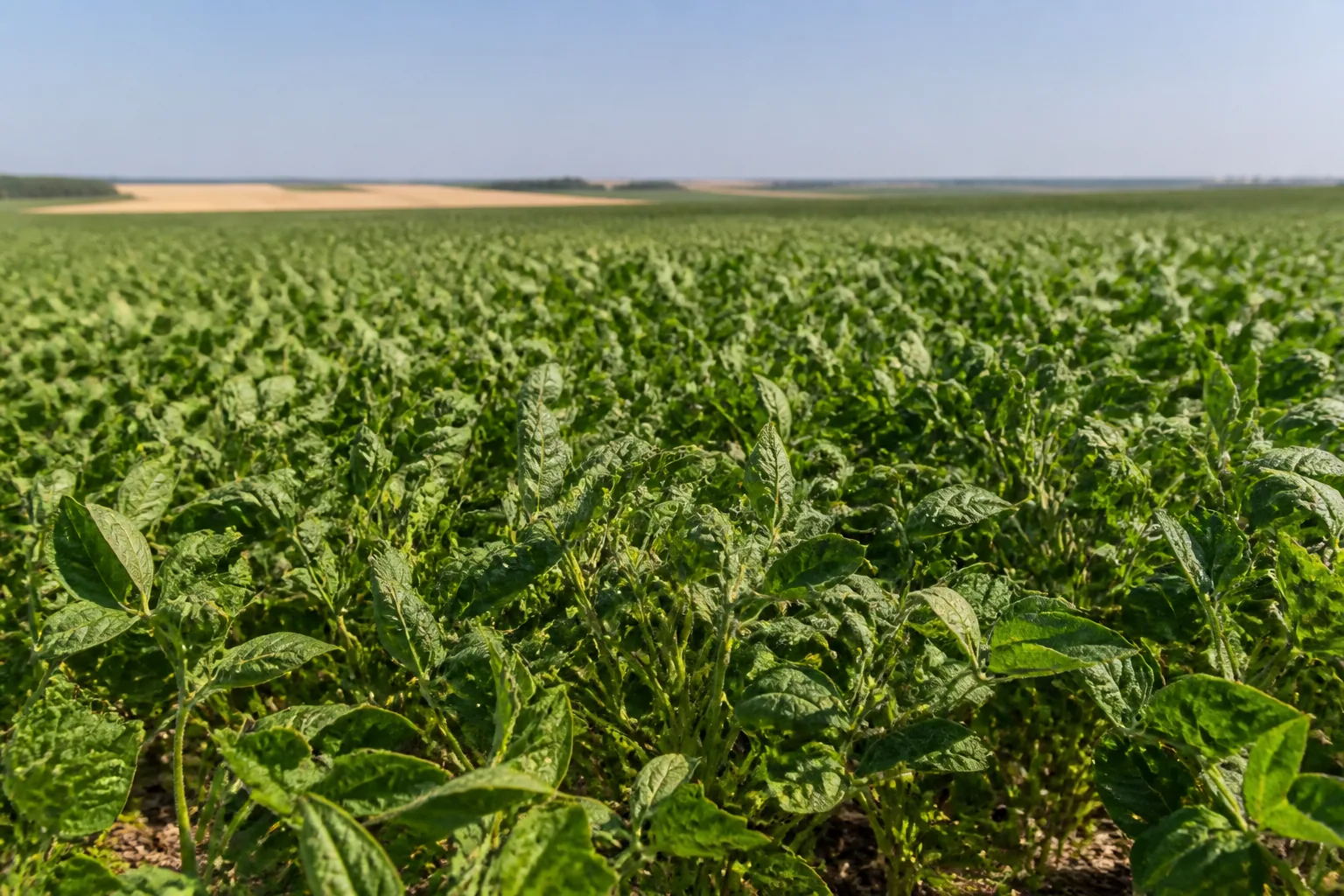
In short: heat stress occurs when the plant's heat load exceeds its ability to cool and adapt. In addition to the daily maximum, solar radiation, humidity, wind, soil moisture, warm nights and the phenological state also matter. The few hot hours around flowering are often more important than the weekly average.
Why can a leaf be warmer than the air?
A leaf exposed to the sun absorbs radiation energy. If it can absorb enough water, it cools itself by evaporation. In a lack of water, the stomata partially close, evaporation decreases, and the temperature of the leaf may rise. In a weak wind, the warm air layer is more difficult to exchange around the leaf.
Therefore, the same 35 °C may mean a different load on moist soil with slight air movement than in a dry root zone with strong sunlight. The regional maximum alone does not describe the stress of the field.
What signs are you looking for?
- leaf drift, spooning or changes in leaf position;
- afternoon withering, which doesn't settle down even in the evening;
- scorched leaf edges, lightening or fast-drying spots;
- flower or fruit initiation kick;
- uneven development in shallower, sandier or compacted zones;
- rapid satellite vegetation index decrease, which can also be confirmed in the field.
None of these are exclusively heat stress symptoms. Disease, root damage, nutrient problems and chemical exposure can also give a similar picture, so always compare an affected and a healthy control point.
What do you check 2-3 days before a heat wave?
- Phenological sensitivity: many crops are more vulnerable during flowering, fertilization and early fruiting.
- Root zone water resources: don't just look at the surface; check at several depths and in several field zones.
- Irrigation system: pressure, spray pattern, clogging, water capacity and time required for the entire area.
- Night minimum: the persistently warm night increases the total load.
- Previous stress spots: a hilltop, a sandy lane, a field wind and a compacted turn often indicate first.
Watering before a heat wave
If the root zone is already incomplete, time the water replacement in such a way that the plant does not reach the critical days with a depleted supply. At the same time, too large a single dose can cause airless soil, runoff and loss of nutrients. The dose should be adapted to the soil's water-holding and absorbing capacity.
Daytime foliar cooling irrigation is a separate technology, where water quality, application intensity, disease risk and the suitability of the equipment also matter. Don't treat it as an automatic solution for every crop.
What can the map inside the field show?
Topographic, soil, and satellite data can help identify faster drying or weakening zones. These are good targets to visit before a heat wave. However, the map is not a diagnosis: the cause must be confirmed by examining the roots, soil and plants.
FAQ
Does high air temperature always cause heat stress?
Not to the same extent. The temperature of the plant is also shaped by solar radiation, wind, humidity and water supply. With a good water supply, evaporation can cool, while in a lack of water the leaf can heat up more due to the closing stomata.
Is the afternoon wilting surely a need for watering?
Not necessarily. Temporary wilting can occur even with adequate soil moisture, if the atmospheric demand is faster than the root's water uptake. Check the moisture in the root zone, and don't just make a decision based on the position of the leaves.
Does heat stress go away at night?
Not always. A warm night increases the loss of breathing and reduces the possibility of regeneration. Several hot days in a row together can pose a greater risk than a single short heat spike.
Related professional background
The calculation bases of the relationship between plant water use and the weather are a FAO plant evapotranspiration guide sum up. For culture-specific temperature limits, use data from local consultants or variety trials.
